
Chronic Headache Treatment in Jonesboro, GA
Signs Your Headaches May Be Neck Related
Persistent headaches may involve more than stress or temporary tension. Neck joint dysfunction, irritated nerves, muscle tension, poor posture, or other mechanical problems may be contributing when headaches continue, return repeatedly, or interfere with daily life.
Common signs may include:
- Headaches that begin in the neck and travel toward the forehead or behind the eyes
- Pain at the base of the skull or upper neck
- Frequent tension headaches or recurring headaches
- Headaches associated with prolonged computer work, reading, or poor posture
- Neck stiffness or reduced neck movement
- Headaches accompanied by shoulder pain or arm discomfort
- Temporary relief followed by recurring headaches
These symptoms do not automatically confirm a cervicogenic headache or neck-related condition. A thorough evaluation helps determine whether the neck, joints, muscles, or nervous system may be contributing before treatment is recommended.

Why Chronic Headaches May Keep Returning
Persistent headaches often involve more than one contributing factor. Neck joint dysfunction, muscle tension, irritated nerves, posture, and movement patterns may work together and cause headaches to return even after temporary relief.
Factors that may contribute include:
- Neck joint restriction or reduced cervical movement
- Muscle tension in the neck and upper shoulders
- Irritated nerves or increased sensitivity
- Poor posture during computer work or daily activities
- Previous injuries affecting the neck
- Sleep habits or repetitive movements that continue to aggravate the area
The purpose of the evaluation is to identify which factors appear most relevant in your case. That allows care to be selected according to the findings rather than treating every headache the same way.

How Care Is Selected for Your Headaches
Care is selected according to the findings from your evaluation, how your headaches affect daily life, and which factors appear to be contributing. There is no single treatment approach that is appropriate for every type of headache.
Care may include:
- Chiropractic adjustments when appropriate
- Treatment to improve neck and upper back movement
- Soft tissue treatment for muscle tension and restriction
- Neuromodulation or other supportive therapies when indicated
- Posture correction and rehabilitation exercises
- Home recommendations to reduce repeated aggravation
- Imaging, referral, or specialist consultation when needed
The specific combination and frequency of care are based on your examination findings, goals, and response. Treatment is adjusted as your condition changes rather than following a one-size-fits-all approach.
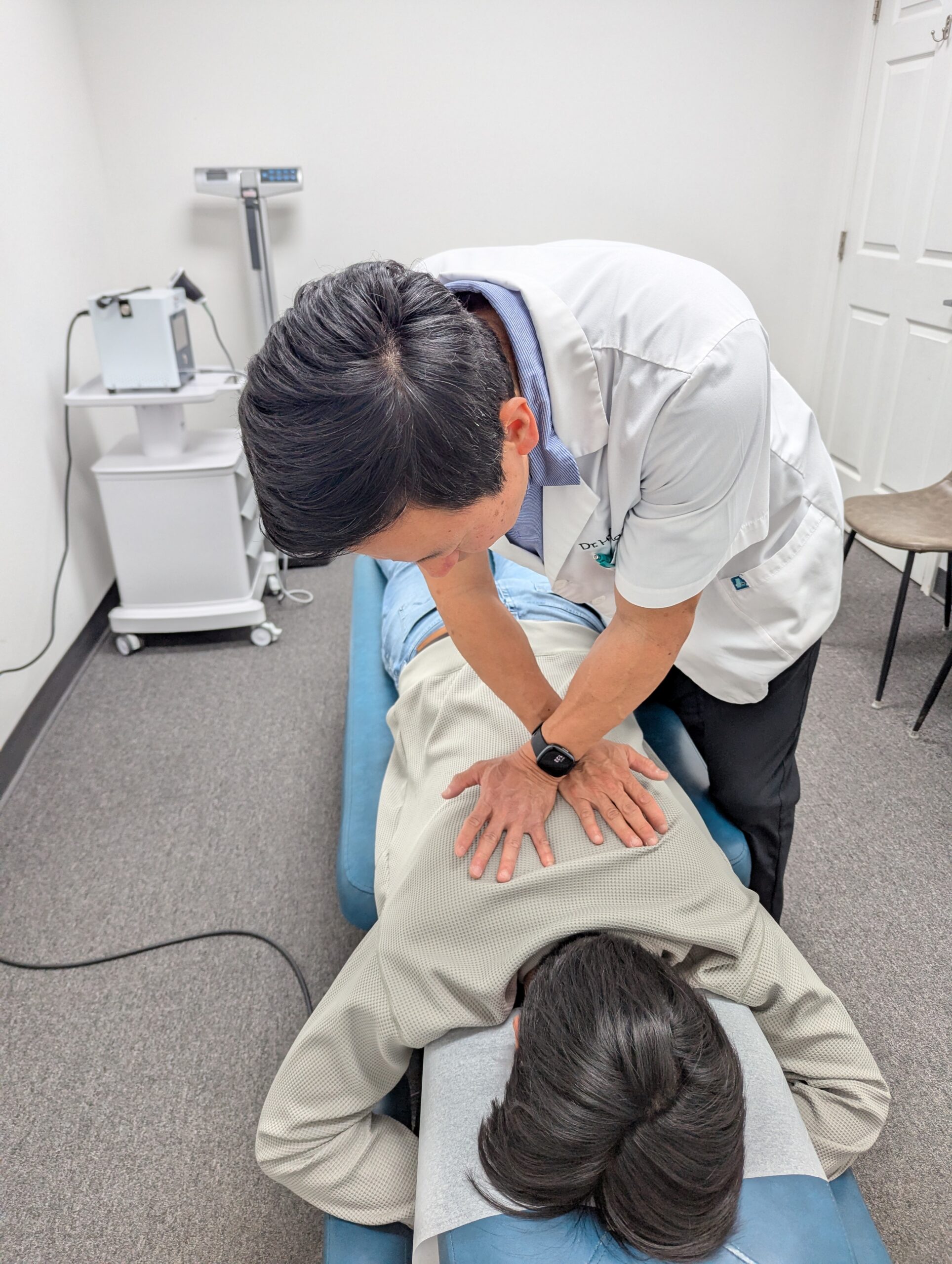

Dr. Hyung Pak
A Thorough Evaluation Comes Before Treatment
Chronic headaches can have different causes. Dr. Pak evaluates neck movement, neurological findings, posture, muscle tension, functional limitations, and available imaging to determine which factors may be contributing to your headaches.
Your recommendations are based on what is found during the evaluation, not on a predetermined treatment package. If conservative chiropractic care appears appropriate, Dr. Pak will explain the findings and recommend a structured plan based on your condition and goals.
When Previous Headache Treatment Has Not Helped
Many people seek our evaluation after medications, injections, physical therapy, or previous headache treatment have not produced lasting improvement. A new evaluation may help identify mechanical or functional factors that have not yet been fully addressed.
A new evaluation may be helpful when:
- Headaches improve only temporarily and continue returning
- Medication provides short-term relief but the headaches keep coming back
- Headaches interfere with work, sleep, driving, or daily activities
- Previous treatment focused mainly on symptom relief without identifying contributing factors
- You have been told to “live with” your headaches but still want a conservative option
- Your headache pattern has changed since your last evaluation
Previous treatment that has not helped does not necessarily mean every conservative option has been exhausted. It does mean the next recommendation should be based on a careful review of your history, current findings, and previous response to care.

Who May Be a Good Fit for This Approach
This approach may be appropriate for people whose headaches have lasted several weeks or longer, continue to return, or interfere with normal daily activities. The purpose of the evaluation is to determine whether your condition appears suitable for structured conservative care.
You may be a good fit if:
- Your headaches have lasted several weeks or longer
- Headaches continue to return despite previous treatment
- Headaches interfere with work, sleep, driving, or daily activities
- You suspect your headaches may be related to your neck or posture
- Previous treatment has not produced lasting improvement
- You want a thorough evaluation before deciding on care
- You prefer a conservative approach when appropriate
Not every headache is appropriate for conservative chiropractic care. If your examination suggests that imaging, referral, or another type of care is more appropriate, Dr. Pak will explain that clearly and help guide the next step.


Dr. Hyung Pak
Find Out What May Be Contributing to Your Symptoms
A thorough evaluation can help clarify whether neck dysfunction, muscle tension, posture, irritated nerves, or other mechanical factors may be contributing to your headaches.
If your condition appears appropriate for conservative chiropractic care, Dr. Pak will explain the findings and recommend the next step. If another type of care, imaging, or referral is more appropriate, that will be explained clearly as well.