
Back Pain, Disc & Sciatica Treatment in Jonesboro, GA
Signs Your Back Pain May Involve a Disc or Nerve Problem
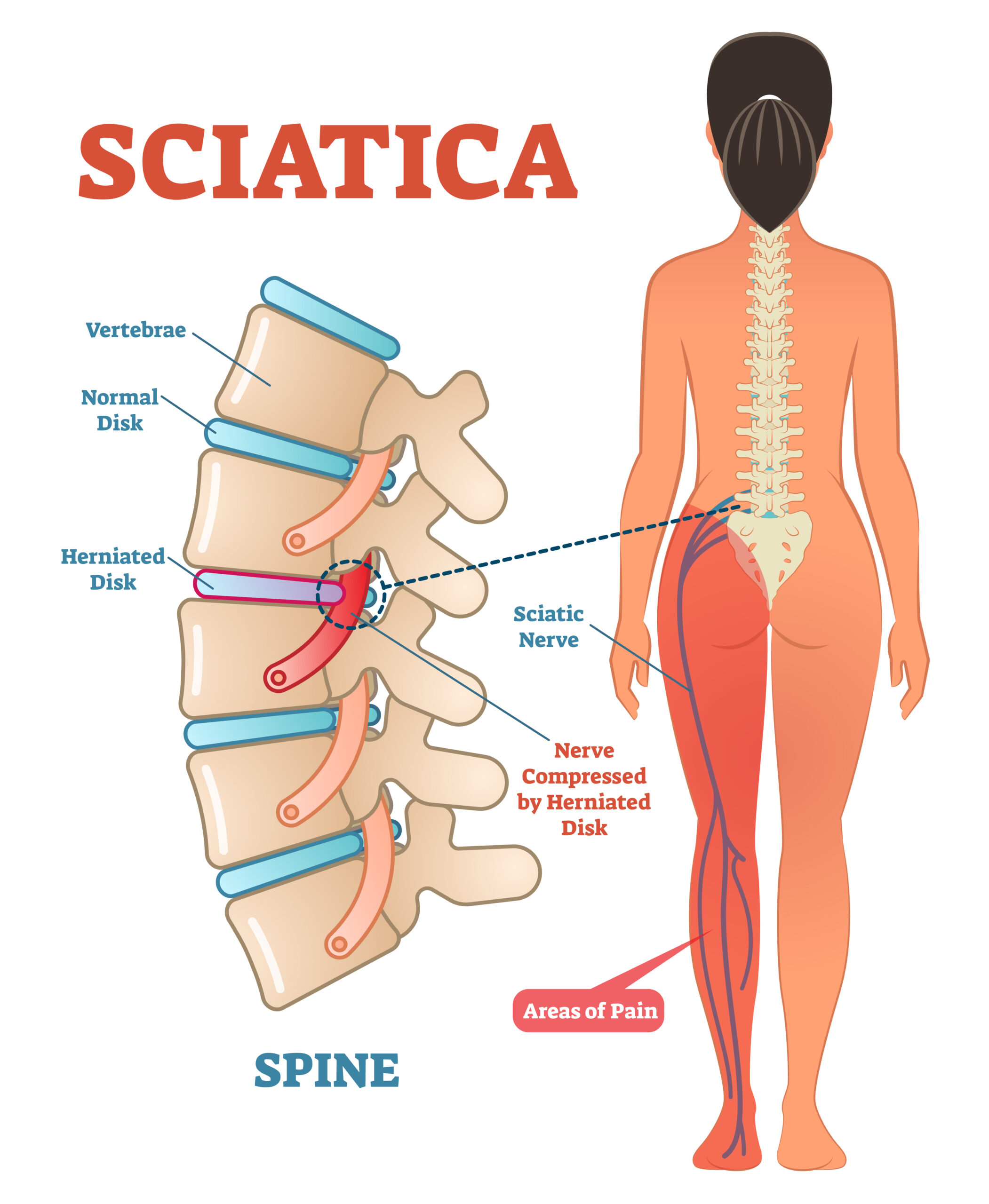
Persistent back pain may involve more than tight muscles or temporary inflammation. A disc, joint, or irritated nerve may be contributing when symptoms continue, return repeatedly, or begin affecting your daily function.
Common signs may include:
• Pain that travels into the buttock, hip, or leg
• Numbness, tingling, burning, or altered sensation
• Pain that worsens with sitting, bending, lifting, or standing
• Recurrent flare-ups that provide only temporary relief
• Weakness, stiffness, or reduced mobility
• Difficulty sleeping, working, walking, or exercising normally
These symptoms do not automatically confirm a disc or nerve condition. A thorough evaluation helps determine which structures and functional problems may be contributing before care is recommended.

Why Back Pain, Disc Problems & Sciatica May Continue
Persistent symptoms often involve more than one factor. Disc changes, irritated joints, nerve sensitivity, muscle guarding, reduced mobility, and poor load tolerance may work together and keep the problem from settling down.
Factors that may contribute include:
- Disc degeneration, bulging, or irritation
- Restricted spinal or joint movement
- Nerve irritation or increased sensitivity
- Muscle guarding and persistent stiffness
- Reduced strength, endurance, or load tolerance
- Movement habits that repeatedly aggravate the area
The goal of the evaluation is to determine which of these factors appear most relevant in your case. That allows care to be selected according to the findings rather than treating every patient the same way.
How Care Is Selected for Your Condition
Care is selected according to the findings from your evaluation, how your symptoms affect daily function, and how your condition responds over time. There is no single treatment approach that is appropriate for every patient.
Care may include:
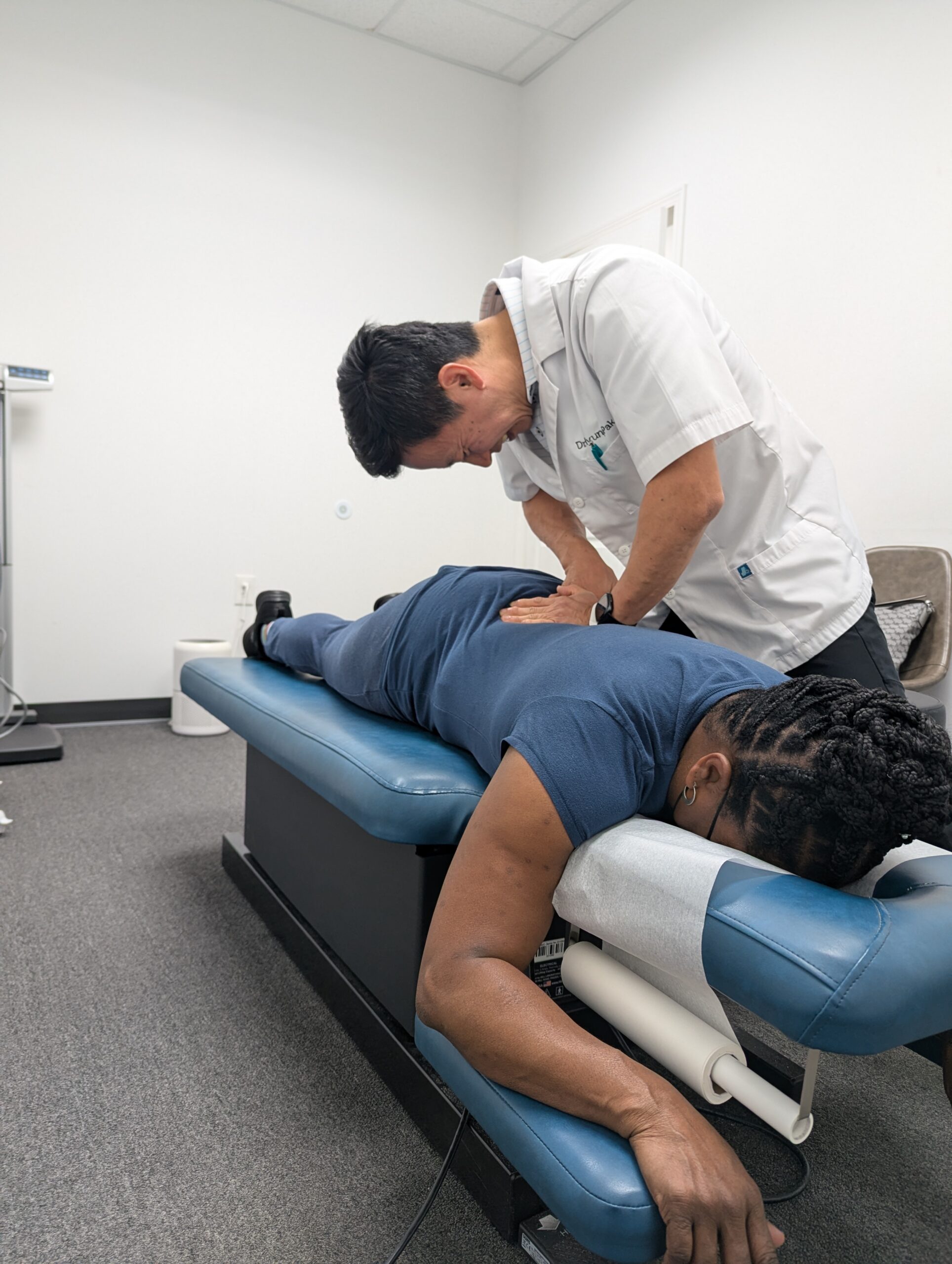
- Chiropractic adjustments when appropriate
- Spinal decompression for selected disc-related conditions
- Soft-tissue treatment for muscle guarding and restricted movement
- Neuromodulation or other supportive therapies
- Mobility, stabilization, and rehabilitation exercises
- Home recommendations to reduce repeated aggravation
- Imaging, referral, or specialist consultation when needed
The specific combination and frequency of care are based on your examination findings, goals, and response. Treatment is adjusted as your condition changes rather than following a one-size-fits-all package.

Dr. Hyung Pak
A Thorough Evaluation Comes Before Treatment
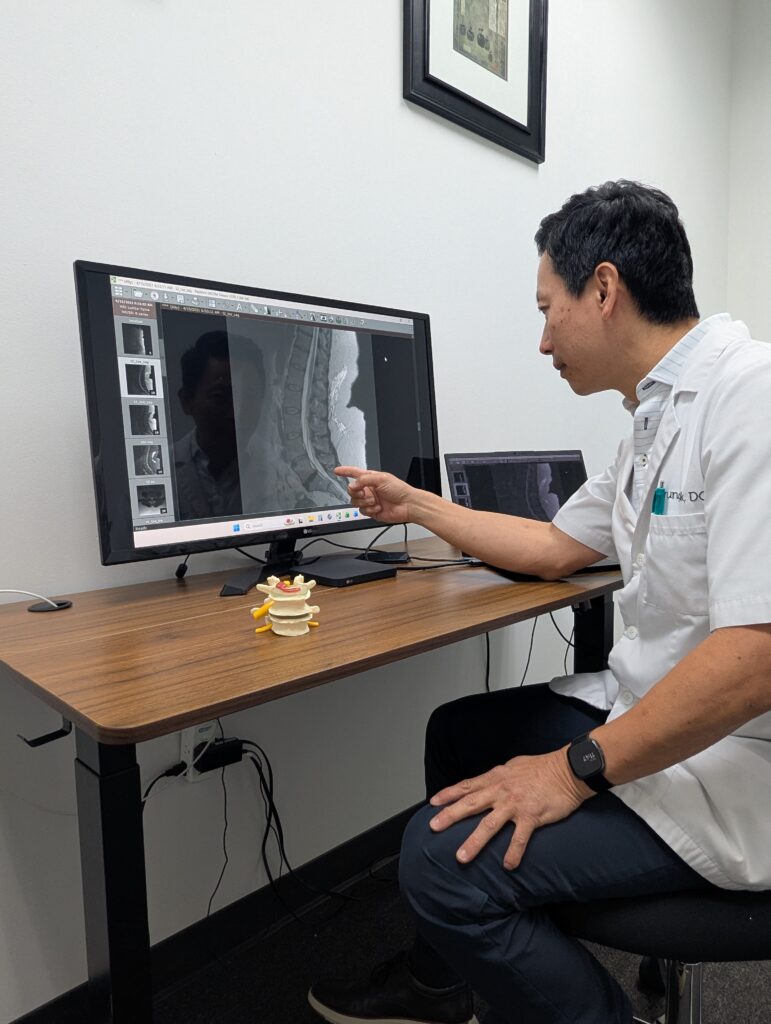
Chronic back pain, disc problems, sciatica, and nerve-related symptoms can have different causes. Dr. Pak evaluates spinal movement, neurological findings, functional limitations, and available imaging to determine which factors may be contributing to your condition.
Your recommendations are based on what is found during the evaluation, not on a predetermined treatment package. If conservative chiropractic care appears appropriate, Dr. Pak will explain the findings and recommend a structured plan based on your condition and goals.
When Previous Treatment Has Not Helped
Many patients seek our evaluation after medications, injections, physical therapy, previous chiropractic care, or extended rest have not produced lasting improvement. A new evaluation may help identify mechanical or functional factors that have not yet been fully addressed.
A new evaluation may be helpful when:
- Symptoms improve only temporarily and keep returning
- Pain continues to affect sitting, standing, walking, sleep, or work
- Leg symptoms, numbness, tingling, or weakness remain unexplained
- Previous care focused mainly on symptom relief without clarifying the cause
- You have been told to “live with it” but still want a conservative option
- Your condition has changed since your last evaluation
Previous treatment that did not help does not necessarily mean that every conservative option has been exhausted. It does mean that the next recommendation should be based on a careful review of your history, current findings, and prior response to care.

Who May Be a Good Fit for This Approach
This approach may be appropriate for people whose symptoms have lasted several weeks or longer, continue to return, or interfere with normal daily activities. The purpose of the evaluation is to determine whether your condition appears suitable for structured conservative care.
You may be a good fit if:
- Your symptoms have lasted several weeks or longer
- Back pain, sciatica, numbness, or tingling keeps returning
- Sitting, standing, walking, sleep, work, or exercise is affected
- You suspect a disc or nerve problem may be involved
- Previous treatment has not produced lasting improvement
- You want a thorough evaluation before deciding on care
- You prefer a conservative approach when appropriate
Not every patient is appropriate for chiropractic care. If your examination suggests that imaging, referral, or another type of care is more appropriate, Dr. Pak will explain that clearly and help guide the next step.

Dr. Hyung Pak
Find Out What May Be Contributing to Your Symptoms
A thorough evaluation can help clarify whether disc changes, nerve irritation, restricted movement, muscle guarding, or other functional factors may be contributing to your symptoms.
If your condition appears appropriate for conservative chiropractic care, Dr. Pak will explain the findings and recommend the next step. If another type of care, imaging, or referral is more appropriate, that will be explained clearly as well.